
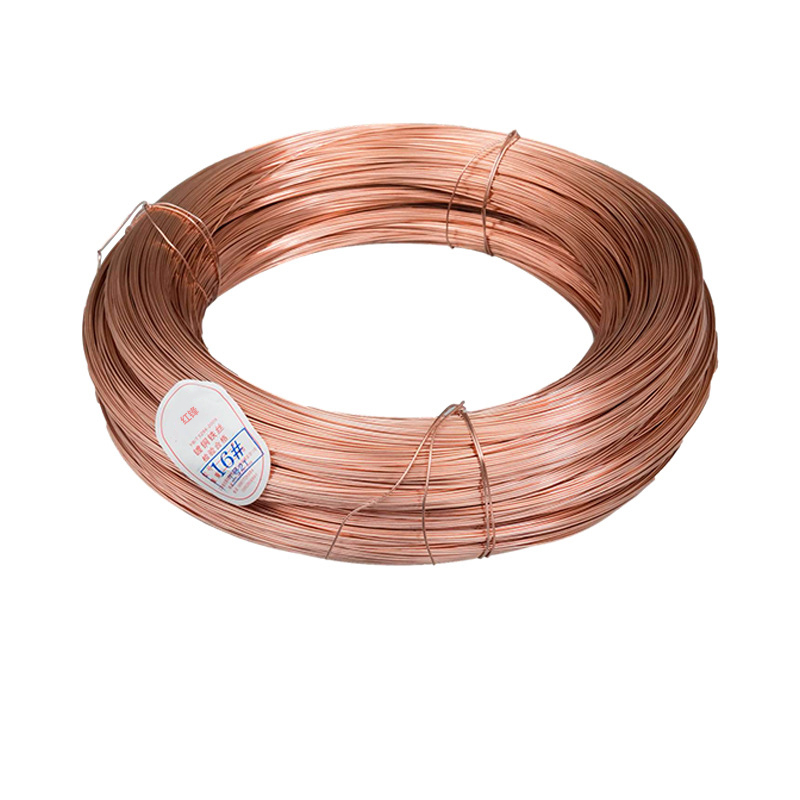
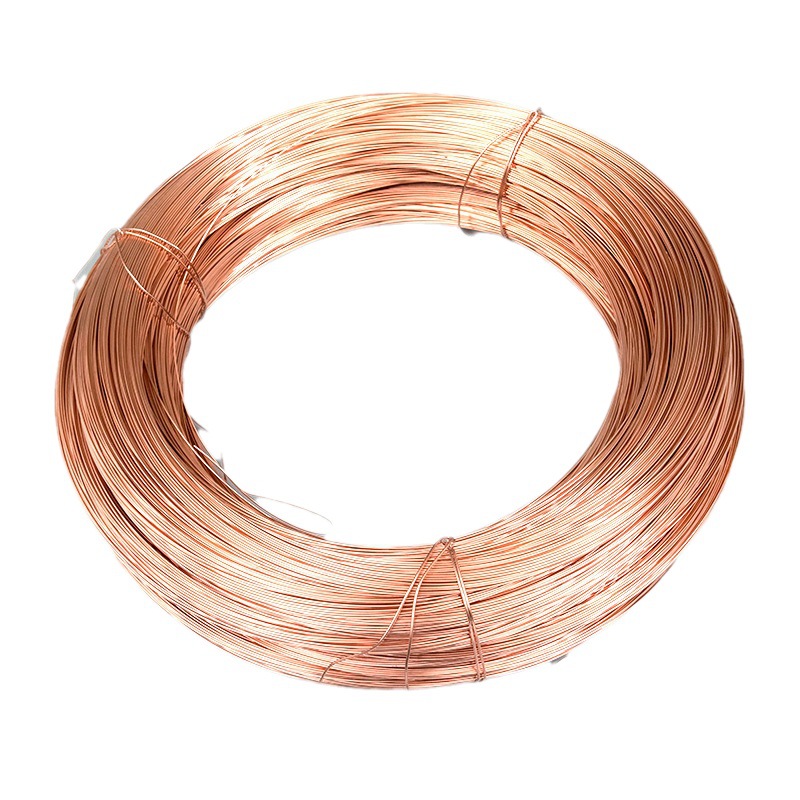
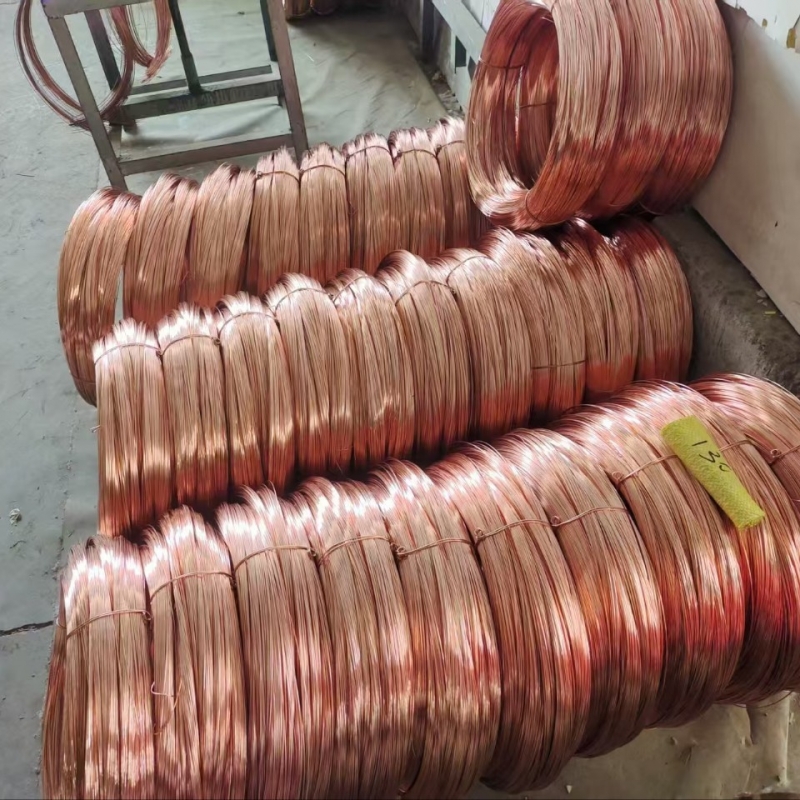
Copper-coated iron wire is a type of iron wire that is coated with metallic copper on its surface. Through processes such as chemical copper plating or electroplating copper, the metal copper is fixed on the surface of the iron wire, enabling it to possess the properties of both copper and iron.
Raw materials
They are generally made from high-quality low-carbon steel wire rods, such as Q195 and H08A materials from Jiujiang Group, etc.
Production process
Usually, ordinary carbon steel is cold-drawn into steel wires, and then a layer of copper is coated on the surface through processes such as electroplating.
Product features
Superior performance: It possesses the strength and toughness of steel, as well as the conductivity, corrosion resistance of copper. The surface is smooth and flat, which is conducive to subsequent processing.
Cost advantage: Light in weight, it can save copper materials and has a relatively lower cost. It is a new generation product replacing the traditional copper wire.
The copper layer is firm: The copper layer is thick and pure, with a strong bond between copper and iron. It has a golden color, good flexibility, strong resistance to bending, does not deteriorate or lose copper, and can be used repeatedly for a long time.
Specification parameters
Wire diameter: Common specifications range from 0.1 to 4 millimeters. Some manufacturers can offer products with diameters ranging from 0.2 to 3.0 millimeters.
Tensile strength: Generally, it is 30-50 kilograms per square millimeter. The tensile strength of products produced by different manufacturers and using different processes may vary.
Copper plating layer thickness: The thickness of the copper plating layer is generally 2-5 μm, and the copper content is not less than 99.9%.
Packaging method
The common packaging method is to use strapping, with wax paper or plastic film as the inner lining, and then wrapped with jute cloth on the outside. There is also wooden shaft packaging, with each shaft weighing around 50kg, or silk bundling packaging, with each bundle weighing 25-50kg.
Application fields
Electronic industry: In electronic components, it can be used to make springs, connecting wires, etc. Its excellent electrical conductivity and relatively low cost make it an ideal choice for manufacturing electronic products.
Construction industry: Due to its excellent corrosion resistance properties, it is often used as reinforcing bars in construction structures, especially in marine or high-humidity environments.
Decorations and handicrafts: Due to their aesthetic appeal and corrosion resistance, they are often used to create various decorations and handicrafts, such as garden decorations, lighting accessories, etc.
Automobile manufacturing: Components such as those used in making car radiators, due to their excellent heat conductivity and corrosion resistance.
Fishing industry: The fixed hooks and connecting parts used for making fishing nets, with their corrosion-resistant properties, can adapt to the marine environment.
Home supplies: They can be used to make various hanging items and clothes drying racks, and they have excellent appearance and durability.

LiveChatclose
 Send Email
 Whatsapp