
The Birth of a Nail: Forged from Iron
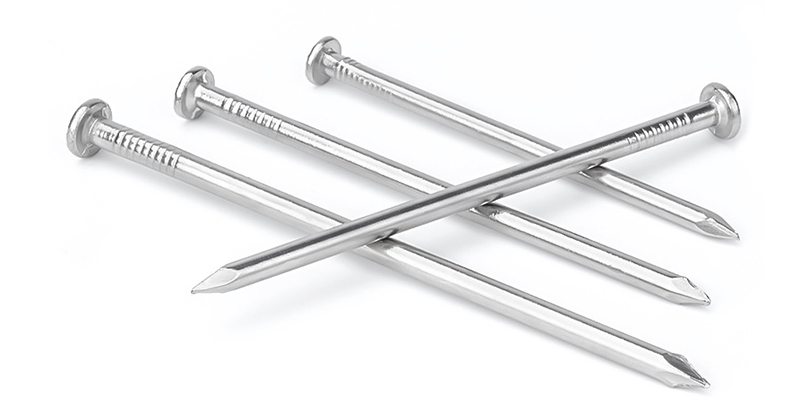
Hematite, slumbering deep in the Earth's crust for hundreds of millions of years, never imagined it would take on a sharp form to become a tiny fulcrum connecting the world. When the steel teeth of mining machinery tear through the rock strata, the crimson ore, mixed with rock fragments, sees the light of day—and the life of a nail is foreshadowed amid the roar.
The ore is fed into a crusher, where steel hammers pound it repeatedly into fist-sized lumps. It then travels along a conveyor belt into a ball mill. Inside the sealed cylinder, steel balls and ore chunks tumble and grind; after three hours, the hard ore turns into fine powder, like the Earth shedding its rigid outer shell to reveal a sincere core. This powder is sorted by a magnetic separator to remove impurities, then mixed with limestone and coke in precise proportions before being fed into a blast furnace heated to 1,200 degrees Celsius. The heat and chemical energy released by the burning coke reduce the iron oxide in the ore powder to molten iron, a dark red liquid pooling at the furnace bottom like a sleeping fire dragon.
The molten iron is poured into a converter, where excess carbon is removed through high-pressure oxygen blowing, transforming it into low-carbon molten steel. When the steel reaches 1,500 degrees Celsius, it is cast into long, thin billets. As they cool, a grayish-blue scale forms on their surface. These billets are reheated to 1,000 degrees Celsius in a heating furnace, softening like dough, then repeatedly pressed and stretched by the rollers of a steel rolling mill. Finally, they become wire rods only a few millimeters in diameter—the original skeleton of a nail.
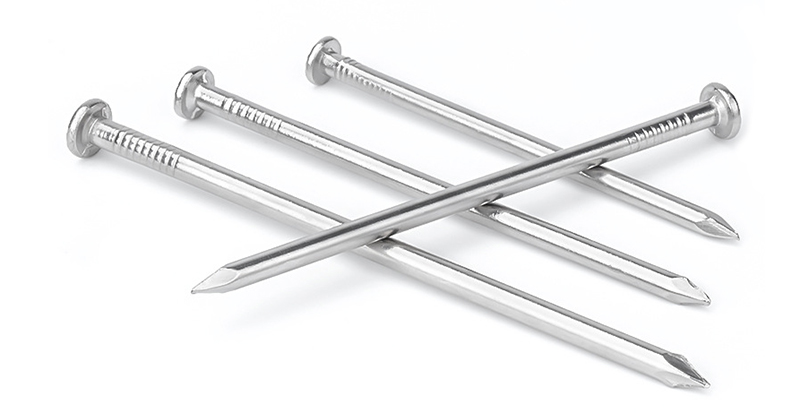
The wire rods are pickled to remove scale, then drawn into thinner steel wires by a wire drawing machine, with a diameter tolerance controlled within 0.01 millimeters. Next, the wires are sent to a nail-making machine, where punches strike at a rate of three times per second. One end is pressed into a sharp point, and the other is forged into a flat head. Each punch is accompanied by metal deformation and a crisp sound, as if marking the rhythm of giving life to this piece of steel wire.
The formed nails undergo quenching: they are heated in a salt bath furnace at 850 degrees Celsius, then quickly immersed in cold water. This changes the crystal structure inside the metal, greatly enhancing its hardness and toughness. Once cooled, the nails are plated with a layer of zinc or copper. In the electroplating tank, an electric current allows metal ions to adhere evenly to the nail surface, forming a dense protective layer that resists corrosion.
Finally, after sorting, counting, and packaging, the nail—transformed from ore—joins thousands of its counterparts on a journey to construction sites, furniture factories, and repair workshops. It may connect two pieces of wood to support the frame of a house; it may secure an electric wire to ensure the city's operation; or it may repair a broken tool to extend its usefulness.
From ore slumbering for eons to a practical tool forged through high temperatures, pressure, and refinement, the birth of a nail is a microcosm of human industrial wisdom. It is a celebration of life where metal dances with flame, and hardness coexists with precision. Though tiny, with its steel body, it carries the mission of connecting, fixing, and supporting—becoming one of the countless tiny fulcrums that build the civilized world.

 Send Email
 Whatsapp