
The Core Differences Between Cold-Drawn Wire And Hot-Rolled Wire And Their Applicable Scenarios.
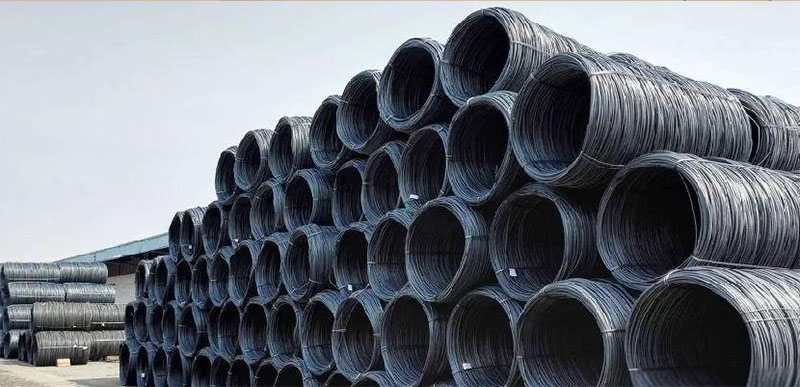
In the metal processing industry, cold-drawn wire and hot-rolled wire are the two most widely used types of basic metal wires. They are like "twin brothers" in the metal material family—seemingly similar in shape, but due to fundamental differences in processing technology, they exhibit distinct variations in performance, cost, and application scenarios. Whether in mechanical manufacturing, construction engineering, electronic appliances, or the automotive industry, correctly distinguishing the core characteristics of the two and making accurate selection decisions directly affects product quality, production efficiency, and overall costs. This article will comprehensively analyze the "advantage debate" between cold-drawn wire and hot-rolled wire from three dimensions: processing principle, core differences, and scenario adaptation.
I. Processing Principle: The Fundamental Divide Between "Cold Plastic Deformation" and "Hot Plastic Deformation"
The performance differences of metal wires originate from variations in processing temperature and forming methods—cold-drawn wire focuses on "room-temperature precision finishing," while hot-rolled wire emphasizes "high-temperature rapid forming." The core logics of these two processes are completely different.
1. Cold-Drawn Wire: "Meticulous Craftsmanship" at Room Temperature
The processing of cold-drawn wire is analogous to "pulling noodles at room temperature." Metal coils (such as carbon steel and stainless steel coils) remain in a solid state at room temperature. A continuous tensile force is applied by a cold drawing machine, forcing the wire to pass through conical dies with decreasing apertures in stages. To prevent surface scratches or breakage caused by friction between the wire and the dies, strict pretreatment is required before processing: first, scale is removed from the surface through pickling or mechanical peeling; after cleaning and drying, graphite or special drawing oil is applied as a lubricant; then, the wire enters a multi-pass drawing process, and finally, the wire is "squeezed thinner and stretched longer" to the target specification.
This cold working method does not rely on high temperatures. The atomic structure of the metal rearranges under mechanical force, and the crystal grains are refined and arranged more densely, forming a "cold work hardening" effect. This is the core reason for the significant improvement in the strength of cold-drawn wire.
2. Hot-Rolled Wire: "Rapid Forming" at High Temperature
The processing of hot-rolled wire is similar to "kneading dough at high temperature." Metal coils are heated to 800-1200°C (above the metal recrystallization temperature). At this point, the activity of metal atoms increases, plasticity reaches its peak, and the metal becomes soft and easy to deform. The heated coils pass through continuously arranged rolling rolls and are rapidly formed under the action of rolling force. Thick-specification wires can be processed in one pass, without complex pretreatment and multi-pass processing.
The high-temperature environment greatly reduces the plastic deformation resistance of the metal, resulting in extremely high processing efficiency. However, it also causes scale (commonly known as "black skin") to form on the metal surface. The crystal grains grow rapidly at high temperatures, and the structure is relatively loose—this determines the performance characteristics of hot-rolled wire.
II. Core Differences: A Comprehensive Comparison from Performance to Cost
If processing principle is the "cause," then differences in performance, appearance, cost, etc., are the "effects." The table below intuitively presents the core differences between cold-drawn wire and hot-rolled wire from 12 key dimensions:
Comparison Dimension | Cold-Drawn Wire | Hot-Rolled Wire |
Processing Temperature | Room temperature (no heating required) | High temperature (800-1200°C) |
Surface Quality | Smooth and clean, no scale or burrs, surface roughness Ra ≤ 0.8μm, ready for direct use | Rough with scale ("black skin"), slight burrs, requires pickling/grinding for precision applications |
Dimensional Accuracy | Extremely high, diameter tolerance ±0.01-0.05mm, roundness error ≤ 0.03mm, regular cross-section | Relatively low, diameter tolerance ±0.1-0.5mm, large roundness error, prone to irregular cross-section |
Mechanical Properties | Tensile strength 350-1200MPa (increased by 30%-60%), high yield strength, excellent toughness and wear resistance | Tensile strength 200-500MPa, good plasticity but average toughness, weak wear resistance, poor performance uniformity |
Specification Range | Diameter 0.1-20mm, obvious advantage in fine specifications, supports coiled/straight customization | Diameter 5-50mm, mainly thick specifications, mostly coiled, difficult to process fine specifications |
Material Compatibility | Suitable for carbon steel, stainless steel, copper wire, aluminum wire, etc., supports precision material processing | Mainly used for carbon steel and low-alloy steel, not suitable for high-precision material processing |
Production Cost | Complex process (pretreatment + multi-pass drawing), high equipment investment, medium to high cost | Simple process, high energy consumption at high temperature but fast processing, low equipment investment, low cost |
Subsequent Processing | Can be directly electroplated, welded, and bent, no surface pretreatment required, low process cost | Requires scale removal (pickling/sandblasting) first, more subsequent processing steps, high cost |
Packaging Requirements | Moisture-proof and rust-proof packaging (export-standard pallets + stretch film) required, suitable for long-distance transportation | Simple binding packaging, prone to rust, additional rust-proof treatment required for export |
Delivery Cycle | 7-10 days for regular specifications, 10-15 days for customized specifications | 3-7 days for regular specifications, fast delivery speed |
International Adaptability | Complies with precision standards such as ASTM, EN, and JIS, can be directly exported to high-end markets | Complies with basic industrial standards, mostly used in low-end markets or rough processing |
Core Advantages | Precision, high strength, high-quality surface, flexible customization | Low cost, large batch capacity, fast delivery, good plasticity |
Detailed Explanation of Key Differences:
Performance Aspect: The "cold work hardening" effect of cold-drawn wire makes its strength far exceed that of hot-rolled wire. For example, the tensile strength of carbon steel cold-drawn wire can reach 500-1200MPa, while that of hot-rolled wire is only 200-500MPa. This allows cold-drawn wire to bear greater loads and is suitable for load-bearing and wear-resistant scenarios; although hot-rolled wire has low strength, it has good plasticity, is easy to bend and cut, and is suitable for rough processing that does not require high precision.
Appearance and Accuracy: The surface smoothness and dimensional accuracy of cold-drawn wire are its core competitive advantages. The micron-level tolerance control enables it to be directly used in precision assembly (such as electronic component pins and automotive springs); the scale and rough surface of hot-rolled wire determine that it can only be used in scenarios with low appearance requirements (such as construction binding wire and ordinary iron nails).
Cost Aspect: Cold-drawn wire requires more equipment investment and processing steps, so its per-ton cost is higher than that of hot-rolled wire. However, since it does not require subsequent pretreatment, it can reduce the overall production process, and the total cost may even be lower; hot-rolled wire takes "low price and fast delivery" as its core advantage and is suitable for bulk procurement sensitive to cost.
III. Scenario Adaptation: No "Better," Only "More Suitable"
Cold-drawn wire and hot-rolled wire are not a matter of "superiority or inferiority," but a choice of "scenario adaptation." Combined with practical industrial applications, the following scenarios can quickly match the corresponding wire type:
1. Cold-Drawn Wire: Accurately Adapted to High-End Manufacturing and Precision Requirements
Mechanical Manufacturing: Automotive shock absorber springs, bearings, gears, and high-strength fasteners (bolts, nuts) rely on its high strength and dimensional accuracy to ensure product durability and assembly precision;
Electronic Appliances: Fine-specification cold-drawn wire (0.1-1mm) is used for wire and cable conductors and electronic component pins, requiring high electrical conductivity and precise diameter control;
High-End Hardware: Stainless steel wire mesh, precision metal baskets, and high-quality hangers require a smooth surface and regular cross-section to improve product texture;
Special Fields: Medical devices (precision metal wires) and aerospace components require high-strength and high-stability materials that comply with international standards.
2. Hot-Rolled Wire: Focusing on Basic Industry and Bulk Requirements
Construction Engineering: Construction binding wire, scaffold fasteners, ordinary iron nails, and raw materials for steel mesh have low requirements for precision and strength and pursue low cost and large-batch supply;
Low-End Hardware: Ordinary iron wire, steel wire brushes, and simple metal brackets do not require surface treatment and can be directly cut and bent;
Rough Processing Raw Materials

 Send Email
 Whatsapp