
Iron Wire: A Fundamental Material Across Multiple Fields, with Ubiquitous Practical Value
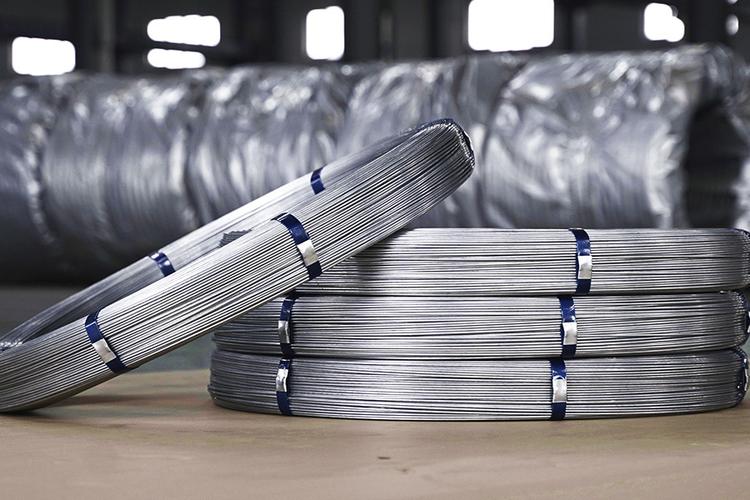
As a metal product based on low-carbon steel, iron wire, with its core advantages of low cost, excellent toughness, easy processability, and strong versatility, has become an indispensable fundamental material in human production and daily life—from industrial manufacturing to daily routines, and from infrastructure projects to agricultural breeding. Though seemingly ordinary, it plays a crucial role in various fields through its diverse forms and functions, with an application scope and practical value far beyond common perception.
I. Construction and Infrastructure Sector: Supporting the "Backbone" of Safety and Stability
In construction and infrastructure development, iron wire is an essential auxiliary material for ensuring project quality and construction safety, with core applications focusing on structural reinforcement, construction protection, and other scenarios:
Binding and Reinforcement: Low-carbon iron wire (primarily Q195 and Q235 grades) is a "must-have" in concrete construction. It is used to firmly bind and fix steel bar frames, preventing displacement during pouring and ensuring the structural strength of bridges, high-rises, highways, subways, and other projects. Typically with a wire diameter of 1.2-3.0mm, this type of iron wire boasts high toughness, allowing manual bending without professional tools, which adapts to the rapid operation needs of construction sites. It is in great demand in regions experiencing infrastructure booms, such as Southeast Asia and Africa.
Protection and Support: Thick-gauge iron wire (3.0-6.0mm) is used to manufacture safety nets and guardrails for construction scaffolding, as well as fixing wires for construction formwork, providing a safety barrier for workers. Fine iron wire, on the other hand, can secure wall pipelines and ceiling keels, making decoration and construction more precise and efficient.
: Surface-treated (e.g., galvanized, plastic-coated) iron wire can be crafted into architectural decorative nets, balcony railings, staircase handrails, etc., balancing practicality and aesthetics. Especially in high-end construction projects in the Middle East, galvanized iron wire is a preferred choice for decoration and structural matching due to its strong corrosion resistance.
II. Agriculture and Horticulture Sector: A "Valuable Assistant" for Production and Cultivation
In agricultural production and horticultural planting, iron wire’s plasticity and weather resistance make it a practical material suitable for various scenarios, covering the entire process of planting and breeding:
Plant Support: In vegetable greenhouses and orchard planting, fine iron wire (0.8-2.0mm) is used to build growth supports for climbing plants (such as cucumbers, grapes, and kidney beans), helping plants grow upward and improving ventilation and light transmission. It can also be made into horticultural fences and flower pot stands to organize planting spaces, adapting to the needs of home gardening and large-scale farms.
Breeding Protection: Galvanized iron wire (hot-dip galvanized or electro-galvanized) is an ideal material for manufacturing breeding fences, chicken coops, rabbit hutches, and fishing net frames due to its rust and corrosion resistance. The wire diameter can be adjusted according to breeding types (2.0-4.0mm), enabling it to withstand wind, rain, and other outdoor conditions with a service life of 5-8 years. It is highly favored in regions with large-scale agriculture, such as South America and Eastern Europe.
Crop Handling: Soft low-carbon iron wire is used to bind crop straws and branches, facilitating harvesting, transportation, and storage. Its flexibility and resistance to breakage prevent crop damage, improving agricultural operation efficiency.
III. Logistics and Packaging Sector: The "Link" Ensuring Transportation Safety
In logistics and cargo packaging, iron wire has become a core packaging material for bulk commodities and scattered goods, thanks to its advantages of firmness, convenience, and low cost:
Bulk Commodity Binding: Thick iron wire (2.5-6.0mm) is used to bind bulk commodities such as steel, wood, pipes, and stone. In container shipping and railway freight, it can securely fix goods, preventing displacement and scattering during transportation and ensuring cargo safety. Mostly supplied in large coils (100kg/200kg), this type of iron wire features strong bulk supply capacity, adapting to the large-scale needs of logistics companies and building material exporters.
Scattered Goods Packaging: Fine iron wire (0.5-1.5mm) is used for sealing and binding cartons and woven bags, especially for heavy cartons (e.g., packaging for home appliances and mechanical parts). Its binding force is stronger than that of tape, and it is not prone to aging, making it widely used in the global logistics industry.
Specialized Packaging: Plastic-coated iron wire (PVC/PE coating) has a soft surface, making it suitable for packaging fragile items and furniture. It avoids scratching the surface of goods during binding, balancing firmness and protection, and meeting the high requirements for packaging details in European and American markets.
IV. Light Industry and Manufacturing Sector: The "Fundamental Raw Material" for Diverse Products
In light industrial production, iron wire is a core raw material for numerous hardware products and daily necessities, which can be processed into a variety of end products:
Hardware Products: Iron wire serves as the basic raw material for fasteners such as iron nails, screws, and nuts. Through processes like wire drawing, straightening, cutting, and shaping, it is made into hardware parts of different specifications, adapting to scenarios such as furniture manufacturing, mechanical assembly, and decoration maintenance. Additionally, it can be crafted into steel wire brushes, iron wire cages, and metal nets (welded wire mesh, woven wire mesh) for cleaning, warehousing, filtration, and other fields.
Daily Necessities and Crafts: Fine iron wire (0.3-1.0mm) can be used to make household items such as clothes hangers, curtain rods, and towel racks, combining practicality with minimalist aesthetics. In the craft industry, iron wire can be bent, welded, painted, and processed into iron art ornaments, holiday decorations, and handmade jewelry. With its flexible plasticity, it has become a popular material for handmade creations, enjoying stable demand in European, American, Japanese, and South Korean markets.
Springs and Accessories: Soft low-carbon iron wire can be made into small springs (e.g., toy springs, office supply springs) as well as toy accessories and small automotive parts through annealing, winding, and other processes. Its toughness and elasticity can be precisely adjusted through processing techniques to meet the performance requirements of different products.
V. Other Specialized Sectors: "Specialized Materials" for Niche Scenarios
Beyond conventional applications, iron wire also plays an irreplaceable role in certain specialized fields:
Medical Assistance: Ultra-fine medical iron wire (with a diameter of less than 0.1mm), after special treatment, can be used to manufacture medical stents, surgical suture auxiliary materials, etc. It requires good biocompatibility and high dimensional accuracy to meet the strict standards of the medical device industry.
Mining and Protection: High-strength iron wire is used to make warp and weft nets for coal mine support and tunnel protection nets. With its high tensile strength and wear resistance, it ensures the safety of coal mining and tunnel construction.
Emergency Rescue: Thick iron wire can be used as a temporary fixing tool in emergency scenarios, such as securing parts during vehicle breakdowns or building temporary shelter frames in disasters like earthquakes. Its durability enables it to cope with complex emergency needs.
Core Advantages of Iron Wire: Why It Becomes a "Necessary Material" Across Multiple Fields?
Significant Cost Advantage: Abundant supply of low-carbon steel raw materials and mature production processes make iron wire much cheaper than copper wire, aluminum wire, and other metal materials. It is suitable for bulk procurement and large-scale applications, particularly favored by customers pursuing cost-effectiveness.
Excellent Processability: Easy to bend, weld, and cut, iron wire can be processed into products of different diameters and surface states through wire drawing, annealing, galvanizing, plastic coating, and other processes, adapting to diverse scenario requirements.
Strong Durability: After surface treatments such as galvanizing and plastic coating, it can effectively enhance rust and corrosion resistance, adapting to complex environments like outdoor and humid conditions, and extending service life.
Wide Versatility: From industrial production to daily life, and from high-end manufacturing to emergency scenarios, iron wire’s applications cover almost all industries, making it a veritable "universal fundamental material".
From the "steel frame" of infrastructure projects to the "details" of daily life, iron wire, with its simple form and powerful practicality, runs through all aspects of human production and life. With the continuous upgrading of processing technologies (such as precise control of dimensional tolerances, improved surface treatment quality, and development of environmentally friendly materials), the application scenarios of iron wire are still expanding. It will remain an indispensable core fundamental material in various fields in the future.

 Send Email
 Whatsapp