
Circular nail: A "universal connector" suitable for multiple scenarios

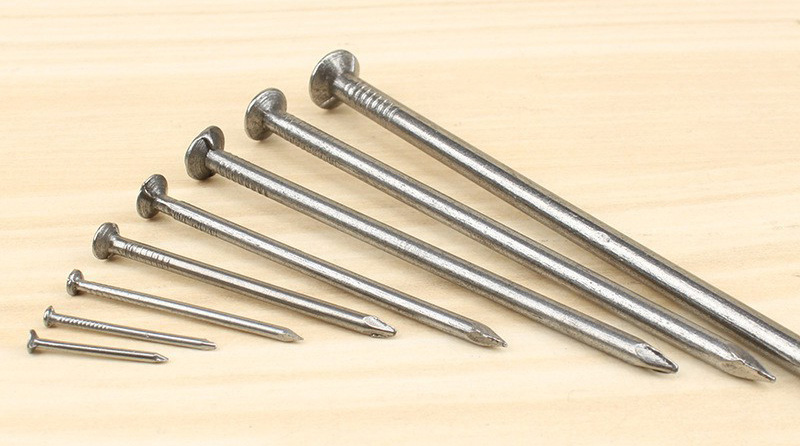
As one of the most basic fasteners, round nails, with their simple structure (cylindrical shank, sharp point, and round or flat head) and easy-to-use design, have penetrated every aspect of daily life and production. From assembling and repairing household furniture to securing details in handmade crafts, building agricultural facilities, and supporting construction work, round nails have become a "versatile small tool" for solving connection needs, thanks to their low cost, ease of operation, and wide adaptability. No complex installation equipment is required—only a hammer is needed to quickly fix different materials, making them an essential connection tool despite their ordinary appearance.
I. Household Life: Practical Daily Applications of Round Nails
In household settings, round nails excel at repairing furniture, organizing storage, and decorating spaces, especially for common household materials like wood and boards:
1. Furniture Assembly and Repair
Reinforcing Old Furniture: Solid wood tables, chairs, wardrobes, and bookshelves often develop loose joints or shifted boards over time. In such cases, round nails of appropriate length (e.g., 50mm-75mm) can be driven diagonally into hidden areas (such as the junction of chair legs and seat panels, or gaps between wardrobe shelves and side panels) to quickly strengthen the structure. For example, driving 2-3 50mm round nails into the connection between the legs and seat of a loose solid wood dining chair can effectively prevent wobbling and extend the furniture’s service life.
Making Simple DIY Furniture: Round nails are cost-effective connectors for DIY furniture projects. When repurposing old wooden planks to make bookshelves or storage boxes, short round nails (30mm-50mm) can be used to assemble the frame and secure shelves. No professional tools are needed, making it easy even for beginners. For small storage boxes, thin round nails (25mm-30mm) are ideal—they ensure a firm connection without splitting the wood due to excessive thickness.
2. Household Storage and Organization
Securing Wall-Mounted Storage Racks: When installing simple wall storage (e.g., wooden shelves or small 置物 racks), round nails help fix brackets to walls. For brick or plaster walls, first drill a small hole (slightly smaller in diameter than the nail) with an impact drill, then drive a 50mm-75mm round nail into the hole, leaving part of the shank exposed to hang the rack. For wooden walls, nails can be driven directly without pre-drilling, ensuring convenience and efficiency.
Hanging Clothes and Small Items: In bedrooms, foyers, and other spaces, round nails can be used to create simple hangers. For instance, driving 30mm-40mm short round nails into the inner side of a wooden wardrobe or foyer wall provides a way to hang scarves, hats, and keys. In balconies, 50mm-long round nails driven into walls can support small laundry racks or storage bags, maximizing vertical space utilization.
3. Home Decoration and Arrangement
Securing Decorative Paintings and Photo Walls: Round nails are perfect for hanging lightweight decorative paintings (weighing no more than 2kg) or photo frames. For wooden frames, 1-2 short round nails (25mm-30mm) can be driven into the back, leaving a small part of the point exposed to hang on wall hooks. To fix paintings directly to wooden walls, 30mm-40mm round nails can be driven into hidden edges of the frame, avoiding damage to the artwork’s appearance.
Installing Holiday Decorations: During festivals, round nails assist in fixing decorative lights, ribbons, and lanterns. Ultra-thin round nails (20mm-25mm) driven into ceiling corners or wall edges in living rooms can hold light strings or ribbons. For outdoor courtyard lanterns, galvanized round nails (75mm-100mm) (rust-resistant) are suitable—they can be driven into tree trunks or fence rails to serve as stable hanging points without rusting easily.
II. Handicrafts: Creative Uses for Round Nails
In handicraft making, round nails are not only connectors but also creative elements that add detail and texture to works, adapting to materials like clay, wood, and fabric:
1. Wooden Handicraft Creation
Making Wooden Ornaments: When crafting small wooden ornaments (e.g., wooden animals or mini models), round nails are used to assemble parts and add details. For example, to make a small wooden bear from wood chips, 30mm round nails first join the head, body, and limbs; then 20mm thin round nails act as "eyes" and "nose." Adjusting the length of the exposed nail creates a three-dimensional facial outline, bringing the work to life.
Assisting in Wooden Seal Carving: Round nails secure wooden blocks during seal carving. Place the block on a workbench, then drive 25mm-30mm round nails into the bench from the block’s edges (avoiding the carving area) to prevent sliding during carving, improving precision. After carving, gently tap the nail ends to remove the block without damaging the bench or wood.
2. Fabric and Clay Handicrafts
Securing Fabric Works: Round nails fix fabric or shape pieces in fabric dolls and tapestries. For a fabric tapestry, drive 30mm-40mm round nails into a wooden frame (spaced 5cm-8cm apart), then wrap and weave colored yarn or fabric around the nails to create unique patterns. For doll heads, 18mm-20mm thin round nails secure filling cotton inside the fabric, preventing shifting and keeping the doll’s shape plump.
Reinforcing Clay Models: When making three-dimensional models (e.g., architectural or figure models) with ultra-light clay or polymer clay, round nails serve as internal supports. For tall clay structures (e.g., towers or castles), insert 1-2 50mm-75mm round nails as a skeleton before covering with clay to prevent collapse under weight. For clay figure limbs, 25mm-30mm thin round nails inside arms and legs keep them straight and resistant to bending.
III. Agricultural Production: Practical Field Uses for Round Nails
In agricultural settings, round nails are indispensable for building facilities, securing crops, and repairing tools. They adapt to common agricultural materials like wood, bamboo poles, and wire mesh, and withstand outdoor conditions:
1. Building Agricultural Facilities
Assisting in Greenhouse Construction: Round nails fix frames and covering materials in simple greenhouses. After building a frame with bamboo or wooden poles, cover it with plastic sheeting or shade nets. Then use 30mm-40mm galvanized (rust-resistant) round nails to drive the sheeting edges into the poles, preventing wind from shifting the material. Nails also secure curtains and windbreaks at greenhouse doors and vents, improving airtightness.
Making Farm Fences: To protect crops from poultry or wildlife, simple fences can be built with wooden stakes and wire mesh. First, drive 150mm-200mm long round nails into the ground along the farm edge (50mm-80mm deep) to secure stakes. Then use 50mm-75mm round nails to fix wire mesh to the stakes (3-4 nails per stake), ensuring the mesh is tight and stable.
2. Repairing Tools and Securing Crops
Repairing Agricultural Tools: Common tools like hoes, sickles, and plows often have loose wooden handles or shifted metal parts. To repair a hoe with a loose handle, drive 2-3 50mm-75mm round nails into the connection between the handle and metal head to strengthen it. For wooden tools (e.g., rakes or shovels), nails reinforce loose handles and tines, restoring functionality.
Supporting Crops: Vine and tall-stem crops (e.g., cucumbers, tomatoes, corn) need support during growth, and round nails assist in building frames. For cucumbers, build a bamboo pole frame, then drive 30mm-40mm round nails into the pole intersections to form stable triangular supports. Tie cucumber vines to the frame. For late-stage corn prone to lodging, insert stakes next to stalks and gently secure them with round nails (avoiding stem damage) to prevent falling.
IV. Construction Work: Auxiliary Uses for Round Nails
In construction, round nails are not used for load-bearing structures but play a key role in temporary fixing and auxiliary work, adapting to materials like wood, gypsum board, and fiberboard:
1. Building Temporary Facilities
Constructing Construction Fences: Round nails fix materials in temporary construction fences (e.g., wooden or bamboo fences). For wooden fences, arrange planks horizontally on stakes and drive 75mm-100mm round nails (2 per plank, top and bottom) to secure them. For bamboo fences, use 50mm-75mm round nails to join bamboo strips into a single structure, then fix to frames. The low cost of round nails significantly reduces temporary facility expenses.
Building Temporary Pathways and Protective Barriers: Round nails are essential for temporary construction pathways and guardrails. Build guardrails with wood by assembling poles into a frame, securing joints with 50mm-75mm round nails. Drive 30mm short nails into the rails to hang safety signs. Use nails to fix safety nets and warning tapes between construction and non-construction areas, ensuring safety.
2. Assisting in Decoration and Renovation
Temporarily Securing Ceilings and Partitions: During indoor ceiling installation with wooden joists, first use 30mm-50mm short round nails to temporarily fix joists to wall and ceiling bases. After adjusting joist position and flatness, permanently secure them with self-tapping screws—nails act as "positioning tools" to prevent shifting. In light steel stud partition construction, nails fix soundproof cotton and moisture-proof paper inside partitions, requiring only a hammer for quick installation and improving efficiency.
Assisting in Wall Decoration: Before pasting wallpaper or wallcoverings, if walls have small bulges or loose bases, drive 20mm-25mm ultra-thin round nails into bulges to flatten the surface. When installing wooden decorative strips (e.g., crown molding or waistlines), temporarily fix strips with nails from hidden edges. After adjusting straightness, permanently secure with adhesive or self-tapping screws, ensuring smooth installation.
V. Selection and Usage Tips for Round Nails
1. Scientific Selection: Matching Scenarios and Materials
By Length: Short nails (20mm-30mm) suit lightweight materials (e.g., fabric, clay, thin wood); medium-length nails (40mm-75mm) for furniture assembly and wall rack fixing; long nails (100mm-200mm) for agricultural facilities and construction fences. For example, use 25mm-30mm short nails for 3mm-5mm thin wood, and 150mm-200mm long nails for wooden fences.
By Diameter: Thin nails (1.5mm-2.5mm) prevent splitting in fragile materials (e.g., gypsum board, soft wood, fabric); thick nails (3mm-4.5mm) provide strong grip for hard materials (e.g., solid wood, stakes). Use 1.8mm-2.2mm thin nails for gypsum board and 3mm-3.5mm thick nails for solid wood furniture.
By Surface Treatment: Ordinary black iron nails work for dry indoor use (e.g., household furniture, crafts); galvanized nails, with rust resistance, suit outdoor or damp environments (e.g., greenhouses, construction fences, outdoor decorations) to avoid rust-related failure.
2. Practical Usage Tips
Pre-Drill to Prevent Splitting: For hard wood or thin boards, pre-drill a small hole (1/2-2/3 the nail diameter) with a drill or awl to reduce splitting and ease insertion. For example, pre-drilling prevents cracks in hard woods like oak or walnut.
Control Hammer Force: Use a claw hammer with moderate force—tap lightly initially to stabilize the nail point and avoid slipping, then gradually increase force until the head is flush or slightly recessed (no more than 1mm) to prevent head deformation or material damage.
Drive Diagonally for Better Grip: When fixing two perpendicular parts (e.g., wood-to-wood or pole-to-wall), drive nails at a 45° angle to increase contact area and improve stability. For example, diagonal insertion is more secure than vertical for chair legs and seat panels.
Prioritize Safety Protection: Wear anti-slip gloves to prevent hammer slips and finger injuries. Keep hands away from the nail point during hammering to avoid splinters. For high places (e.g., wall upper sections), stand on a stable ladder with no one below to ensure safety.
VI. The Value and Advantages of Round Nails
Round nails’ widespread use across scenarios stems from their irreplaceable advantages:
Low Cost: Simple production processes (drawing, cutting, sharpening, heading) keep prices much lower than self-tapping screws or bolts. Mass use, especially for temporary or one-time applications (e.g., construction fences, simple agricultural facilities), significantly reduces costs.
Easy Operation: No professional tools (e.g., drills, nail guns) are needed—only a hammer. Suitable for DIY projects or outdoor emergency fixes, they lower usage barriers for all users.
Wide Adaptability: Compatible with wood, boards, fabric, clay, brick, and gypsum walls, they eliminate the need to switch fastener types for different materials, reducing tool and accessory costs and making them a "versatile solution" for diverse connection needs.
Conclusion: Small Nails, Great Roles
Round nails lack complex structures or advanced performance, but their low cost, ease of use, and wide adaptability make them indispensable in life and production. From small household repairs and creative crafts to agricultural facility construction and construction support, round nails solve practical connection problems with their ordinary design. Though unassuming, their strong adaptability silently supports daily life and production, making them truly "practical and versatile" connectors.

 Send Email
 Whatsapp